SEASONS | RESOURCES
Pentecost
Pentecost is a feast of holy movement. What begins in a room with wind and fire spills into the streets as ordinary people are filled with the Spirit and sent toward the world. Pentecost invites us to notice where God is breathing new life and how that life might move through us into our homes, neighborhoods, and city.
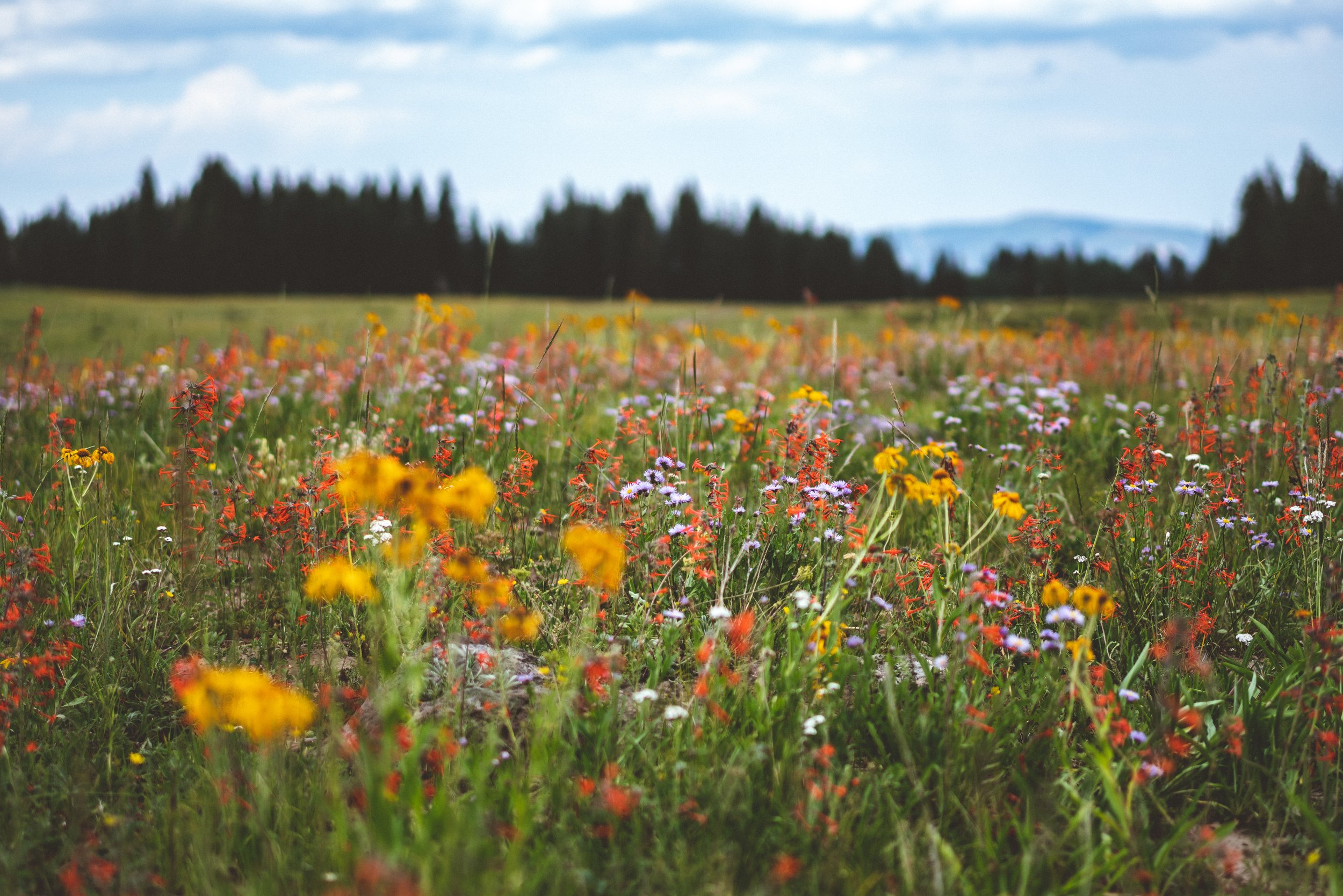
“The whole point about Pentecost was that the disciples, up till then hiding away in an upper room, were blown out on to the street.”
ABOUT THE SEASON
Pentecost means “fiftieth,” marking fifty days after Easter. In the story of Acts, Jesus’ followers are gathered together in Jerusalem when the sound of a rushing wind fills the house and something like flames of fire rests upon each of them. They are filled with the Holy Spirit and begin speaking in the languages of people gathered from many places.
Pentecost is a story of speaking and hearing. The Spirit does not erase the differences between people. Instead, people hear the story of God in the language of their home. Difference becomes a gift rather than a barrier to belonging.
Pentecost reminds us that the presence of God cannot be contained in sanctuaries or reserved for particularly spiritual moments. The Spirit meets people in homes and streets, around tables and across fences, in ordinary conversations and shared public life.
We are not sent away from the ordinary places of our lives. We are sent more deeply into them.
Pentecost invites us to become people who listen well, cross boundaries, speak words that create belonging, and join the life God is already stirring in our homes and neighborhoods.
RESOURCES FOR PENTECOST
Rhythms
Pentecost invites us to pay attention to movement—the wind through the trees, conversations across fences, languages in grocery aisles, laughter in parks, the needs on our blocks.
These simple rhythms help us become more available to the Spirit and to one another: listening before speaking and allowing love to move us beyond what is familiar and toward our neighbors.

Prayer for Pentecost
Spirit of God,
Tune our hearts to hear You.
Help us hear with intention and attention,
Listening longer to those who labor beside us.
Help us hear the weight in the weary words
Of the waiter, grocer, or warehouse worker.
Help us hear the hidden and holy hope
In a child’s question, frustration, and imagination.
Help us hear You in the stories of Scripture,
And both the laughter and lament at the dinner table.
Help us hear with renewed curiosity,
The voices of friends and family we’ve dialogued with for decades.
Help us hear both the needs and knowledge of our neighbors,
Noting where we may serve them and learn from them.
Help us hear You in the stillness of an early summer morning,
And in the enrapturing sounds of a summer afternoon storm.
Help us hear what can often go unnoticed,
The soft response, the silent suffering, the simple joy.
Help us hear when the moment is to remain silent,
And when the moment is to speak with courage.
Help us hear beyond words and beneath the surface of our lives,
Where Your deep love calls to our deep longing.
Help us hear You,
And know Your voice.
Spirit of God,
Help us hear.
Amen.
Prayers



Practice | Listen

The first practice is to listen.
To love a person, or a place, we begin by listening. Listening is how we cultivate connection. The invitation is to be generous with our attention. Listening invites us to give honor and focus through our senses. At the root of all formation and transformation is an awareness. Awareness begins with listening.
Listening is an act of worship. “Hear, O Israel…” is known as the Shema, the central affirmation of the Jewish faith. The first principle and foundation in worship is to hear. The practice of listening to our place may be the pathway to our best prayers.
“Listen to your life…” wrote Frederick Buechner. The noise, both external and internal, makes that invitation seem impossible at times. With any practice, the best practice is to start small.
Walk out the front door, without the phone, around the block… and listen.
Drive with the windows down, and the stereo off… and listen.
Stand in line at the store, the school, the coffee shop, or the shopping center… and listen.
Practice
What brings a smile when you hear it in your neighborhood?
What noises cause concern when you hear them in your neighborhood?
What are the confusing voices and messages you hear in your neighborhood?
What are the hopes you hear for your neighborhood?
Practices








Featured Place | Coffee Shop

“We are not in the coffee business serving people. We are in the people business serving coffee.”
A coffee shop is a sacred place. It is a story of family and community, culture and care. Founded by brothers Hani and Zahi Yaafouri, Steam has created a special place of loyal business and natural beauty.
Hani’s history in coffee began working for Starbucks in his home country of Lebanon. His experience with Starbucks spanned from barista to leadership roles, which provided a unique knowledge about both coffee and business. He moved to Denver in 2006 to join his brother Zahi in master’s degree programs at the University of Denver. Zahi’s background and degrees from DU are in real estate, construction, architecture, and design. Hani’s original plan was to return to the coffee business in Lebanon, but he felt increasingly connected to Colorado. Hani discovered a property on South Pearl Street in 2012, and together the brothers opened Steam in 2013. The complementary spectrum of skills between the two brothers of business, service, and design formed a unique foundation to build upon.
At the heart of Steam is the embodied practice of hospitality. Hani shares the grounding vision for the business they are in: “Coffee is not just what is in the cup. People come for quality for sure, but this is a place where people connect. It's the place people have their first conversation of the day.” He continues with a compassionate tone, “And for some people, it may be the only conversation. I've always believed business is not a transaction. It’s a relationship.” Hani holds a conviction that good coffee should be accessible to everyone: “We keep the price reasonable for a reason.”
The priority of hospitality is communicated by Hani in manager meetings every Thursday when he reiterates the core values of the business, “We strive to serve great coffee with exceptional hospitality in extraordinary settings.” But the practice of hospitality is demonstrated by Hani as he regularly places himself on the schedule as a barista. His presence emanates hospitality and models to every employee the expectations of service and care. Listening to Hani share about Steam is a brilliant blend of both operational and relational values: "We're opening our home for everyone, every day. We better be ready.” His conviction is clear: “Hospitality is nonnegotiable.” He summarizes Steam’s philosophy with the words he first heard from Howard Schultz when working for Starbucks in Lebanon, “We are not in the coffee business serving people. We are in the people business serving coffee.”
That heart of hospitality and serving people has made Steam an influential business in the Platt Park neighborhood. It is the motivation for first-time customers to become regulars, and regulars to become friends. “I think we've seen this over the years. People respond positively to the environment we created. And we’ve become an anchor in the neighborhood.” When asked how Steam has cultivated love for the neighborhood, Hani replies with both humility and pride, “We have had regulars purchase a home in the neighborhood so they can begin their day at Steam.”
In 2021, Steam expanded to a second location in a 110-year-old firehouse on Tejon Street. The locations are each embedded in their neighborhood with unique architecture and design. “Two shops feels like the magic formula for us,” Hani shares with joyous sincerity. The two coffee shops provide connections to diverse neighborhoods while creating room for both businesses to continue to grow. The beauty and hospitality that define Steam are present in both locations. Steam is an inspiring place of people and presence. The coffee shop is a sacred place.
Places




RESOURCES FOR PENTECOST
Recommended Books
These resources explore Pentecost, life in the Spirit, and the calling to become people through whom the love of God takes local form. Read slowly. Stay curious. Pay attention not only to what the Spirit might be doing in you, but also to what the Spirit might be inviting you to notice and join around you.
-

Living the Resurrection: The Risen Christ in Everyday Life
Eugene Peterson’s invites us into the stories of the Resurrection to experience wonder through the eyes of the biblical witnesses, and discover how the practices and perspectives of resurrection life transform your daily work, your daily meals, and your daily relationships.
Living the Resurrection has had a profound influence on my ministry and writing. Peterson is among the few who write about the Resurrection in the present tense―as a reality for us to live into and experience in the here and now. I’m grateful for this summons to not just believe but experience the center of our faith―today.
Robert Gelinas, Lead Pastor of Colorado Community Church, author of Discipled by Jesus
-

Surprised By Hope
Wright convincingly argues that what we believe about life after death directly affects what we believe about life before death. For if God intends to renew the whole creation—and if this has already begun in Jesus’s resurrection—the church cannot stop at "saving souls" but must anticipate the eventual renewal by working for God’s kingdom in the wider world, bringing healing and hope in the present life.
-

Bitter and Sweet: A Journey into Easter
Tsh Oxenreider, author of Shadow and Light: A Journey into Advent, uncovers what it means to participate in the liturgical traditions of Lent including artwork and music that illuminate the impact - both personal and global - of Jesus’s death and resurrection.
-

Bread and Wine: Readings for Lent and Easter
The Plough’s Bread and Wine provides readings ecumenical in scope, and represents both classic and contemporary Christian writers.

More rhythms to root your faith in place.