Car Line
“The aim of prayer [in the car line] is to get us in on what God is doing, become aware of it, join it, and enjoy the fruit of participation.”
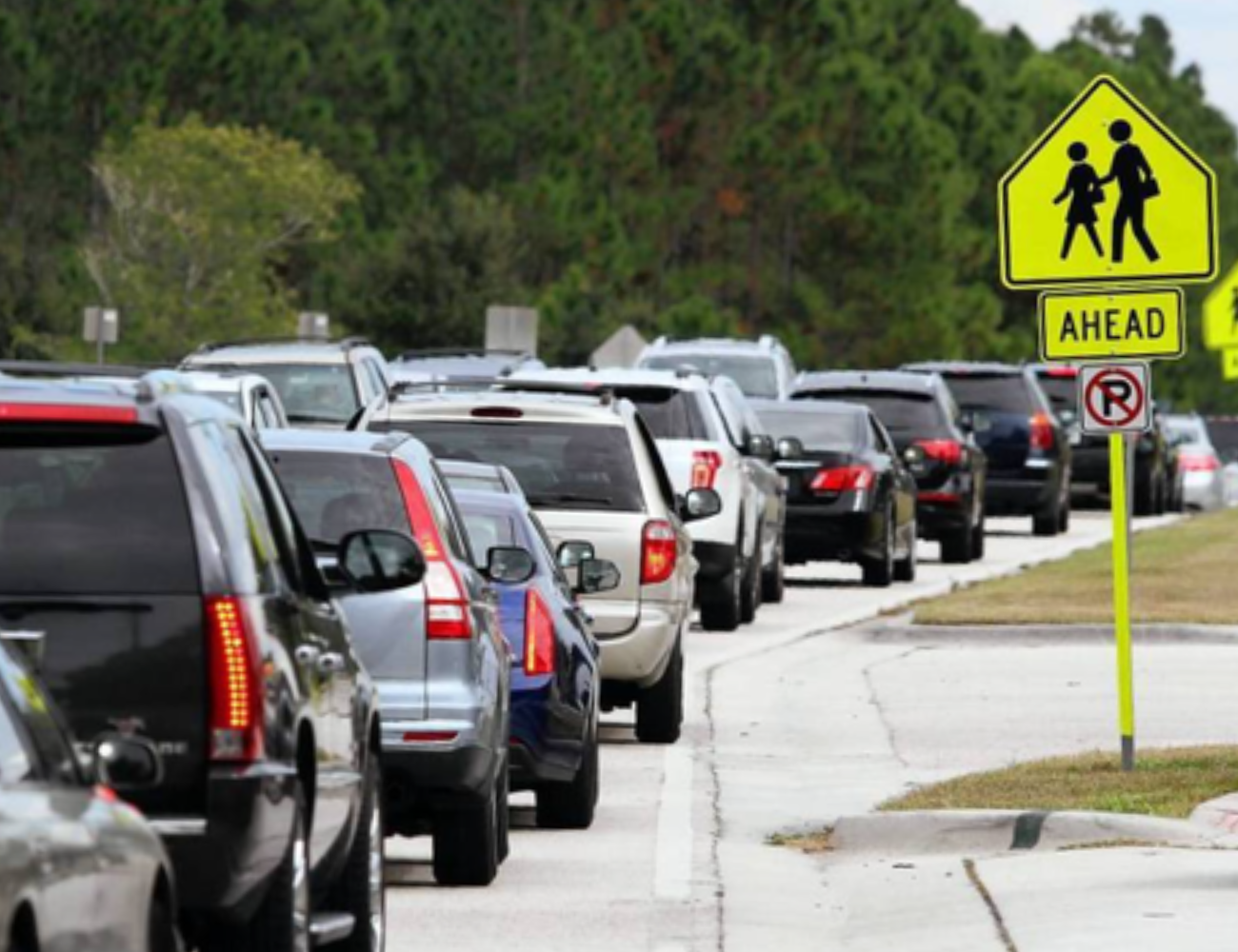
The car line is a sacred place. Is there any other stretch of pavement so dormant most of the time, yet so quickly a pivotal logistics ground for twenty minutes twice a day? During the school year, at set times, cars descend. And with the cars come neighbors overlapping lives. Neighbors cutting each other off, yielding, and goodbying. Neighbors who hold fully aligned hopes for those twenty minutes: that this day will be a good one for our children, that they will be loved, safe, and developed.
It’s easy to miss the sacredness of the car line, because at least for me, it typically involves a fair amount of rush. Words like “tardy” are harshly spoken, and at the last possible moment, essential items are discovered to be missing. There are rules about when you can pull out and the order of door openings and what happens when your children leave their backpacks in the car, and above all, you really do need to move forward.
You may notice that every year, each school introduces a new way to order their car line. A new way that will, most assuredly this time, reduce pedestrian risk and increase efficiency. And yet, the systems are never quite as effective as anticipated. Because car lines involve families and they involve mornings. This combination can be quite disastrous.
Amid the hurry, car lines are also liminal space. And liminal space is difficult to value even though it’s where we spend most of our time, between destinations. It’s an in-between in our days. How we journey between destinations—with God or assuming our own independence, with angst or with peace. Car lines are an in-between of our morning and the day; the in-between of the day and our evening. Like all liminal spaces, they shape us.
Harsh things have been said in the car line as we remember what homework is undone or we begin to let our minds wander to what our days hold next. Rush and distraction are not good for our internal life or for our neighboring. But noticing is.
So we begin to notice. And, as we creep forward, we begin to see neighbors. Neighbors who walked. Neighbors tumbling out of the bus. Teachers welcoming kids. The fifth graders who received the privileged role of being car line helpers.
We see the neighbor walking her daughter to the door in her fanciest blazer, and we imagine her morning. Does she have an important meeting today? An interview? We see the teacher in her spirit-day-themed outfit despite the health update her classroom just received. Is she feeling better? Anticipating her leave coming up? We see a teary friend exit her car with an emphatically slammed door.
We’ve developed rhythms in this car line. I pull into my car line with ten cars in front of us before we get to the coveted unload zone. We pause and begin discussing the day in front of us. A quick intake of prayer requests and spoken prayers. We emphatically read the parking sign, which lost its “A” years ago, but brings us daily delight: “bsolutely No Parking.” We notice the neighbors around us and reflect on how their lives exist beyond what we know. A blessing over the kids: “May you know how loved you are by Jesus and by me, and help others know how loved they are.”
This rushed, liminal space is sacred. And I know it as I call out to neighbors by name or thank the person who opens the car doors. This car line is a place of stretching love. I kiss my kids as they slide past me out the middle doors of the car. And I hope they extend love that day to their neighbors. The car line is a sacred place.
Alli Horst helps leaders make great hires as the CEO of Matchstick. She spends her life outside of work chasing her four kids down the ski slopes, reading, hiking, and frequenting her neighborhood Trader Joe’s with her husband Chris.