Metal Shop
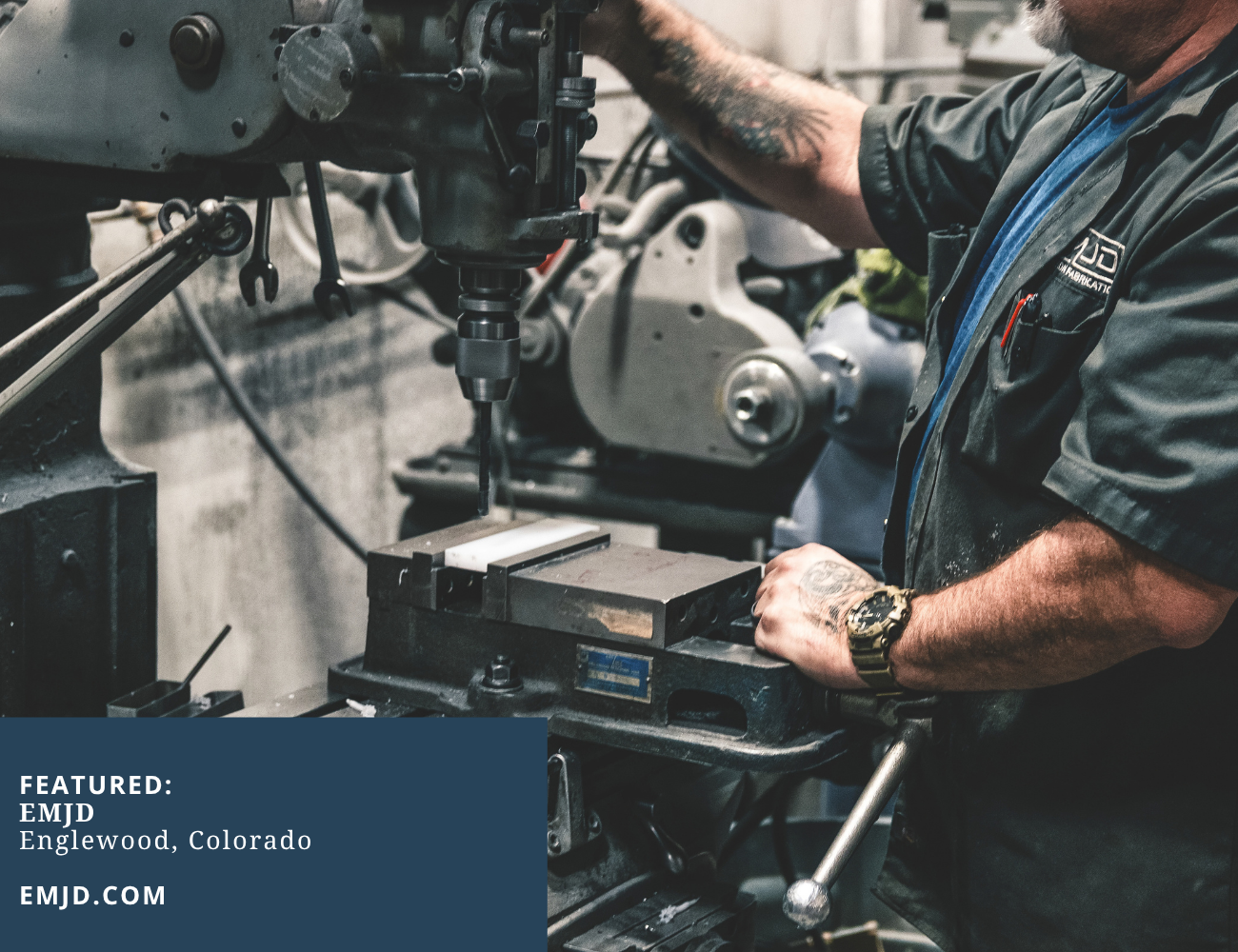
“Our metal shop needed to be a more secure place in order for it to become a more sacred place.”
Three years ago, I began the work of co-leading EMJD, a precision sheet metal manufacturing business in Englewood. I assumed my 17 years in nonprofit leadership would quickly translate into this new blue-collar environment. If I could lead an organization with more than a thousand employees across dozens of countries, surely I could handle a small business with 18 employees under one roof. I was wrong.
Over 45 million Americans (27% of our workforce) are paid for their physical labor. Our blue-collar neighbors work in manufacturing, construction, agriculture, hospitality, retail, transportation, and related industries. They are paid not primarily for the work they do at their computers or in boardrooms, but for the work they produce with their hands.
But most people working in traditional blue-collar jobs are not satisfied with their work. Pew’s latest research shows that “Blue-collar workers are markedly less satisfied with their jobs than other workers. They feel less respected, are less attached to their jobs, and are more likely to view their jobs as just a way to get by, rather than as a career.”
For over five decades, EMJD built a strong reputation for making high-quality aerospace, medical, automotive, and outdoor metal parts for Colorado’s best companies. But we were not going to be winning any best workplace awards. I stepped into leadership of the company with my business partner, Luke. I assumed our MBAs and kind personalities would quickly improve the culture. What surprised me in leading a small business was how upside down my priorities were.
I pushed to provide a financial coaching benefit to our team members, but their first concerns were having reliable coffee, cleaner floors, and a stocked vending machine. I grew smitten with aligning our team incentives through profit-sharing bonuses, but our team first needed to know we had adequate financial reserves to give them real job security. My question was, “How do we make EMJD an amazing place to work?” Their question was, “When sales slow down, will I still have a job?”
To lead this small metal shop business meant first focusing on the fundamentals. Before we could achieve our long-term goals, we needed to prioritize short-term essentials. The team wanted better air quality, a clean break room, and better pay. And they wanted to know they wouldn’t be belittled for making mistakes. As the Pew Research found, the team at EMJD wanted to be respected and to see how their job could amount to more than just getting by.
People working in blue-collar industries need confidence that their owners will pay them on time and pay their team before they pay themselves. These workers need to know that their owners will ensure their HSA and 401(k) withholdings are transferred to their accounts promptly. They need to know their owners will pay their insurers and lenders on time. They need confidence their owners will honor the contracts and terms they have agreed to with their subcontractors and vendors. A workplace can only feel sacred if there is a foundation of trust.
We’ve hired a few new team members for our shop floor team over the past few months, and I’ve been surprised by how many job candidates rightly ask questions about stability during interviews. “Does EMJD feel good about the future orders? Have you done layoffs? How do you weather slowdowns?” These are questions I’ve never asked in an interview. And in my early naivete, I didn’t consider that these were the questions our team members were asking every day.
To be a Christian business owner first meant practicing the most basic Christian values of honesty and sacrifice. Our metal shop needed to be a more secure place in order for it to become a more sacred place. I came into a blue-collar business excited about meaning and purpose, but quickly learned I needed to start with stability and trust.
This month marked three years of leading a small business that 22 people now call their employer. We have big dreams for what this place could someday be. But for now, we remain focused on the little things to improve the daily and weekly experience of those 22 people. It looks far less grandiose than I imagined, but I’m learning that’s exactly what many of our neighbors want and need. The metal shop is a sacred place.
Since 2023, Chris Horst has served as the Vice President at EMJD Precision Fabrication, following a seventeen-year career in the global nonprofit sector. Most recently, he served as the Chief Advancement Officer at HOPE International, where he spent years championing initiatives at the intersection of faith and work—a passion he has also pursued on the boards of the Denver Institute for Faith & Work and the Mile High WorkShop. Outside of his professional life, Chris and his wife, Alli, take great joy in cheering on their four children.