
SEASONS | THE NATURAL YEAR
Spring
As winter loosens its grip and life begins to rise from the ground, may this spring season draw you deeper into the hope of resurrection, the patience of renewal, and the places where God is already bringing life. May you be present to all it holds—the grief, the beauty, the waiting, and the quiet signs of something new.
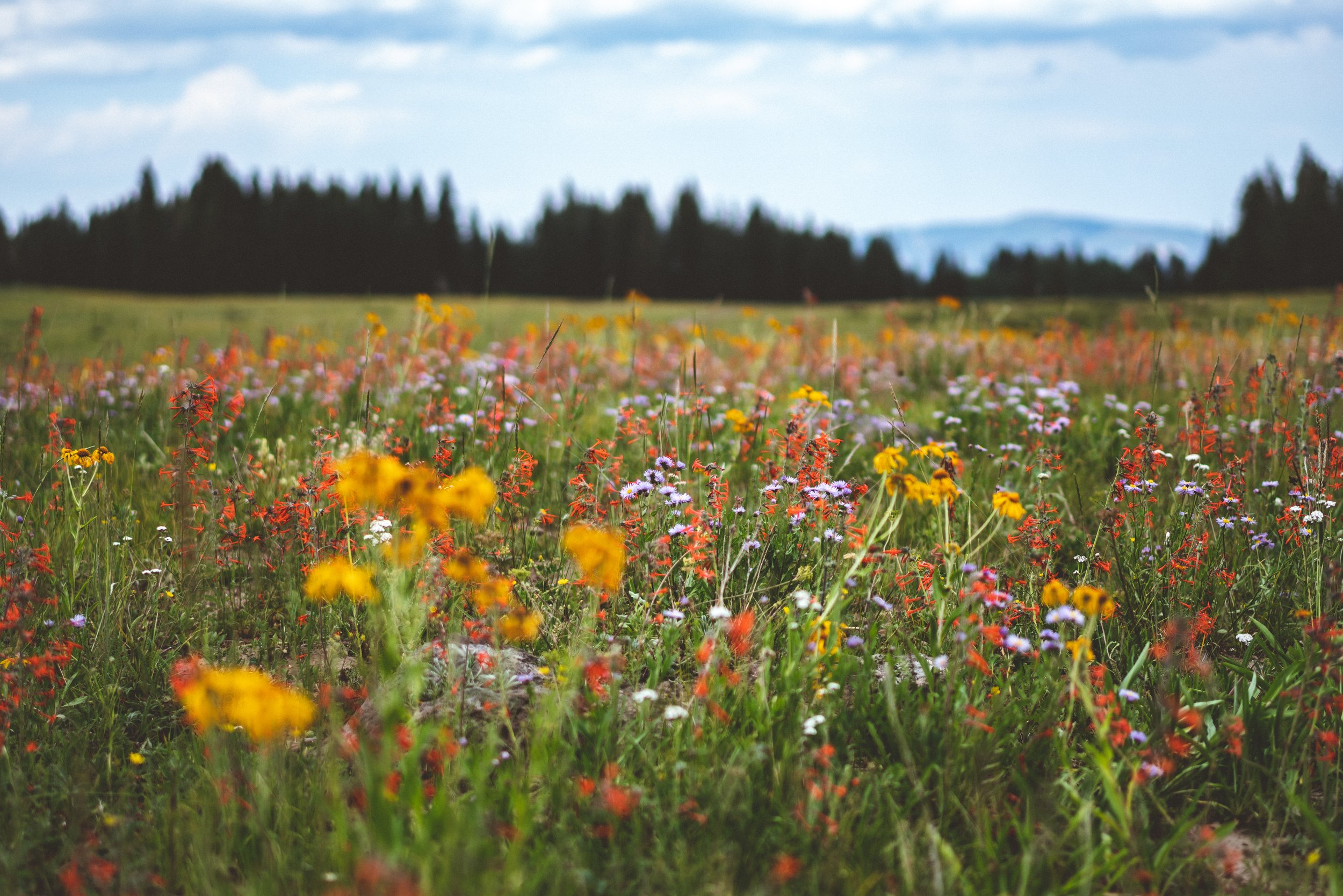
“Our goal should be to live life in radical amazement. ....get up in the morning and look at the world in a way that takes nothing for granted. Everything is phenomenal; everything is incredible; never treat life casually. To be spiritual is to be amazed.”
ABOUT THE SEASON
Spring invites us to notice where resurrection is beginning in our actual places. Not only in gardens, trees, and longer days, but in neighbors stepping outside again, children filling sidewalks, meals shared on porches, and communities beginning to imagine what restoration could look like.
This season reminds us that new life is at work before it is visible. It begins underground, in hidden places, in small acts of faithfulness. Spring calls us to become people who tend what is beginning to grow with patience, hope, and love for the neighborhoods we inhabit.
RESOURCES FOR SPRING
Rhythms
Spring invites us to notice what is beginning to grow. The season does not rush toward fullness. It starts with small signs of life: softened ground, longer light, budding trees, and neighbors stepping outside again.

Growth & Gardens
God of Creation,
Our gardens may not be a significant source of our produce,
they may be only a potted plant or bed of flowers,
but would every garden in our neighborhood
be a living reminder of grace and growth.
May the seeds and soil,
the miracle of multiplication
that begins by being buried,
be a symbol of the hidden and holy work
going on inside of us and everyone around us.
May the sun and rain,
the brilliance of light and showers of water
generously giving energy to every plant,
be a present-day parable of Your prodigal love
offered to everyone on our street.
May the fruit and flowers,
the array of color and burst of flavor
that fill our senses with delight,
be a picture of the beauty in the diversity
of Your Kingdom work in our city.
May the gardens,
a single plant or shared field,
be instructors for us to learn
how to cultivate life and love,
within the places You’ve planted us.
Amen.
Spring Prayers





Practice of Giving Flowers

There is a profound joy in the simple practice of giving flowers to someone. Potentially more than any other practice, giving flowers brings joy to those who both give and receive.
The practice of giving flowers is ancient. Flowers were given as acts of celebration, condolence, and care in the early civilizations of Egypt, Rome, and Greece. Giving and receiving flowers has been shown in studies to increase positive emotional responses. One research team found receiving flowers creates instant delight and increased life satisfaction, study participants reported positive moods that remained for days.
Cari Jenkins shared insights from her practice of giving flowers. “Flowers are a little expression of beauty and kindness. They communicate value about the person, for there is virtually nothing overtly useful about them. They are simply beautiful. Beauty is the function of a cut flower. When I have delivered flowers to neighbors, I am communicating to another, you are beautiful, lovely, and seen.”
Flowers are a beautiful way to introduce yourself to a neighbor. A simple bouquet of cut flowers from your yard, or purchased flowers from a neighborhood store, is an unexpected expression of kindness. Include a small handwritten card with your name and address. “I’ve wanted to meet you. Here is a little gift to say thank you for being my neighbor.”
Kelly Magel grows flowers in her front yard garden for her floral business, Vibrant Root. She is constantly giving bouquets as gifts to neighbors and friends. “Flowers are a small reminder of the beauty beyond ourselves,” said Kelly. “They are a way to share joy with people who may not have the opportunity to engage with beauty every day.”
Giving flowers is a way to show kindness to your neighbors in your building or on your block, at a nearby retirement center, elementary school, or food bank. It is a practice of sharing beauty and spreading joy.
Thank you to Cari Jenkins and Kelly Magel for their contribution to this article.
“Flowers always make people better, happier, and more helpful; they are sunshine, food and medicine for the soul.”
Practice
Grow extra flowers in your yard to give to others.
Cut flowers from your garden or purchase from a neighborhood store.
Trust that everyone enjoys receiving flowers. Don’t second guess yourself.
Keep small vases around that you’re ok to give away.
Deliver flowers with a simple note, and in water, so they can be left on the porch.
Spring Practices









Featured Place | Flower Farm

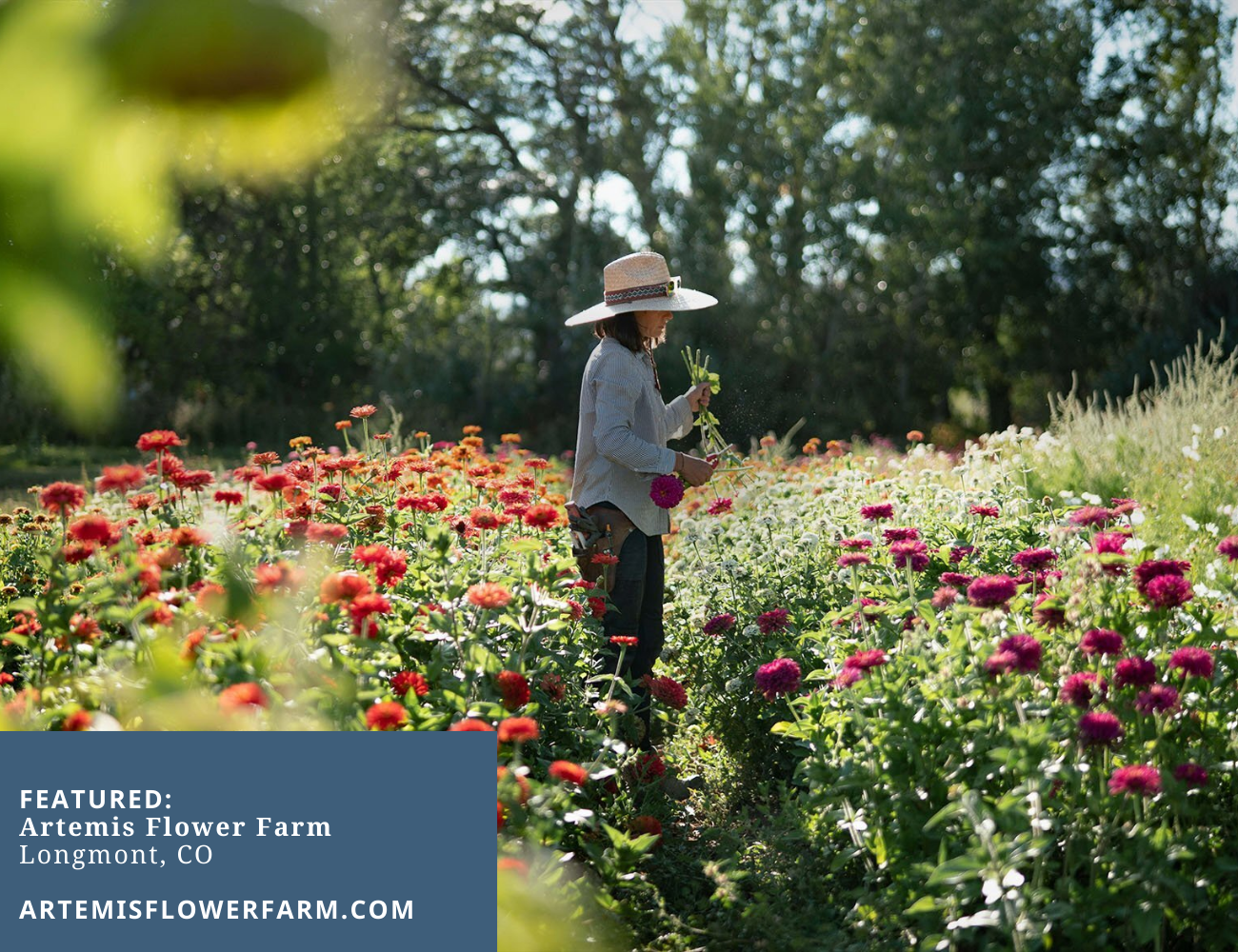
“Tending to the land and to the humans we raise is a sacred and often exhausting act of surrender.”
There’s a moment for many mothers when they hold their child for the first time, and the world seems to shift entirely. While motherhood may feel entirely new and all-consuming, the act of tending to life isn’t new at all. Nearly every stage of human development invites us to care. To tend to life in one way or another seems to awaken life within us. To be human is, at its core, to tend: to give our attention, our energy, our presence, so that life may flourish.
When I think of someone who embodies this rhythm of tending, both to land and to life, I think of Helen Skiba, the renowned Colorado flower farmer behind Artemis Flower Farm. The flowers at Artemis Flower Farm are unparalleled—dainty, boasting, and colorful. Recently, I took the drive to visit Helen at her farm outside Longmont. While I was technically there to pick up a dahlia tuber order (she has the best around), we both knew the real reason was to meet her almost eight-month-old baby girl. We wandered through the farm and into her cozy home tucked right on the property, where her daughter waited…another tender life being lovingly grown alongside the flowers.
Her hands crusted with a layer of fresh earth from being in the fields just moments before, Helen bent down, scooped up her baby girl, and gently brought her to her chest to feed. From nurturing the tender starters going into the earth to nourishing her ever-growing daughter from her own body, tending is woven into every part of Helen’s life. It is the quiet, powerful duality she lives daily—mother and grower, giver of life in many forms. The act of tending, for Helen, feels like a beautiful weaving: one strand dedicated to the land, the other to her family. At this point, the two are inseparable. It’s a life of constant care and responsiveness, one that not only asks much of her but also fills her up, illuminating a quiet, steady joy.
The notion of tending to someone or something is rooted in patience, responsiveness, care, and steady support. Yet even with all that devotion, thriving isn’t always guaranteed. There are seasons on the farm when, despite Helen’s skill and attentiveness, the results don’t match the effort. Growth can be slow. Flourishing can be elusive.
And in much the same way, mothering mirrors this truth. We can give our whole selves, and still face moments where the outcome doesn’t look like we hoped it would. Tending, in both soil and motherhood, requires surrender—to time, to nature, and to the slow unfolding of life. Tending to the land and to the humans we raise is a sacred and often exhausting act of surrender. It asks us to release control while still showing up with constant responsiveness, presence, and care.
We walked back to my car along the dirt path, weaving through their land. Before we parted ways, we found ourselves chatting about her daughter’s most recent sleep regression. Though there are countless books and podcasts offering advice, I loved what Helen shared—that each child is unique and requires different things to thrive. It reminded me of the many plants Helen grows on her land. Each one requires something entirely different to flourish. Her soil is specific to her farm, her climate unique to her location. And what it all demands is a quiet kind of perseverance…the power of consistency and the willingness to nurture something through momentary hardship until it finally blooms. Tending, especially in motherhood, is a radical form of unending love, often unseen in its entirety, and yet it is this sacred act that sustains life in all its many forms.
Margo Wanberg is the co-founder of the City Park Farmers Market and the newly launched Lafayette Farmers Market. Born and raised in Denver and a CU Boulder alumna, she is passionate about sustainable living, beekeeping, and being rooted in community. She finds joy in connecting people with their local food systems and supporting small-scale farmers and producers. Margo and her husband, Peter, reside in Lafayette, where they enjoy raising their two children.
Spring Places



RESOURCES FOR SPRING
Recommended Books
We’ve curated a collection of resources to guide you in Spring—readings, and reflections to deepen your connection with God, your neighbors, and the places you call home.
Slow down. Take joy. Step into the new life Spring promises.
-

Living the Resurrection: The Risen Christ in Everyday Life
Eugene Peterson invites us into the stories of the Resurrection to experience wonder through the eyes of the biblical witnesses, and discover how the practices and perspectives of resurrection life transform your daily work, your daily meals, and your daily relationships.
Living the Resurrection has had a profound influence on my ministry and writing. Peterson is among the few who write about the Resurrection in the present tense―as a reality for us to live into and experience in the here and now. I’m grateful for this summons to not just believe but experience the center of our faith―today.
Robert Gelinas,Lead Pastor of Colorado Community Church, author of Discipled by Jesus
-

Surprised By Hope
Wright convincingly argues that what we believe about life after death directly affects what we believe about life before death. For if God intends to renew the whole creation—and if this has already begun in Jesus’s resurrection—the church cannot stop at "saving souls" but must anticipate the eventual renewal by working for God’s kingdom in the wider world, bringing healing and hope in the present life.
-

Bitter and Sweet: A Journey into Easter
Tsh Oxenreider, author of Shadow and Light: A Journey into Advent, uncovers what it means to participate in the liturgical traditions of Lent including artwork and music that illuminate the impact - both personal and global - of Jesus’s death and resurrection.
-

Bread and Wine: Readings for Lent and Easter
The Plough’s Bread and Wine provides readings ecumenical in scope, and represents both classic and contemporary Christian writers.

More rhythms to root your faith in place.