RHYTHMS | PRAYER, PRACTICE, PLACE
Vol 4. Issue 7
Friends,
Makoto Fujimura wrote in his book, Art and Faith: A Theology of Making, “When we make, we invoke the abundance of God's world into the reality of scarcity all about us.”
In this issue, we have the joy of Gayla Irwin, a trusted friend and artist, guide us in how art can connect us more deeply to ourselves, to God, and to our neighbor through Visio Divina as a Prayer, Collage as a Practice, and an Artist’s Studio as a sacred Place.
We believe the beauty and truth of art can cultivate our care for both people and place. We’re thrilled to host Art & Place, a one-night gallery event with 6 local artists, on Thursday, April 23. More information and registration is available at sacredplace.co.
All blessings.
Jared Mackey
P.S. Register to attend Art & Place, a beautiful evening celebrating local artists on Thursday, April 23.
PRAYER | VISIO DIVINA

By Gayla Irwin
Visio Divina is a prayer practice in which God speaks to us through what we see. In Latin, the words “Visio Divina” mean "holy" or "divine" seeing. I have appreciated this prayer practice for several years, using art. However, it can also be applied to everything we see in the created world, whether grand or tiny. Visio Divina can usher us into a new experience of God.
I invite you to this prayer practice with the attached painting, Kitchen Maid with Supper at Emmaus, by Diego Velázquez, 1620-22.
I pray Visio Divina using a 3-step process:
Step 1 is to Look.
Let your eye roam looking across the entire painting. What first catches your eye? What do you notice about the young woman’s expression? What do you notice about her hands? What about the scene in the background?
Step 2 is to Linger.
Spend a moment lingering over the details. What do you notice about light and dark? What emotions do you see reflected on the woman’s face? What do you think is happening here?
Step 3 is to Listen.
Listen to your own heart. What feelings does the image evoke? What Scripture passages come to mind? How do you sense God is speaking to you through this painting?
Jesus so often revealed himself to people who were considered outsiders at that time—women, servants, the sick, the poor, the overlooked. This painting, and the story behind it, invite us to look for Jesus’ face in unexpected places and among unexpected people.
Gayla Irwin is an artist and spiritual director living near downtown Littleton. She is passionate about helping others cultivate joy and wholeness through contemplative creativity. You can find more at gaylairwin.com or @gaylairwinart on Instagram. Allow Gayla to guide you through this prayer practice on YouTube.
PRACTICE | COLLAGE

By Gayla Irwin
Practice
Gather your supplies. You will need a heavy piece of paper, like watercolor paper or cardstock, to use as a “base” canvas, scissors, and a glue stick. Collect some magazines, old books, and photos. A used bookstore can be a great resource.
Find a spot to spread out. Light a candle and play music, if you’d like.
Open with a prayer for guidance. Pray for an open heart to God and the grace to pay attention.
Cut or tear out pictures from the magazines and photos. Use words or phrases that are interesting to you. Don’t overthink this process, just pick what grabs your attention or appeals to you.
Arrange them on your base. After you have a good selection of images to use, trim as needed, arrange, and glue them down.
Consider what you see and feel. Sit in silence as you look at the collage. Is there something specific coming to the surface? Consider journaling about your response. If you are doing this with others, take a few moments to share about your experience.
“Collage is all about bringing different elements together. Once you form a sensibility about connection, how different elements relate to each other, you deepen your understanding of yourself and others.”
We live in a fast-paced world, full of distractions. This reality can make it difficult to access our own souls, to recognize what is happening in our interior life, much less to hear from God. In his beautiful book, A Hidden Wholeness, Parker Palmer reminds us:
“The soul is like a wild animal—tough, resilient, savvy, self-sufficient, and yet exceedingly shy. If we want to see a wild animal, the last thing we should do is to go crashing through the woods, shouting for the creature to come out. But if we are willing to walk quietly into the woods and sit silently for an hour or two at the base of a tree, the creature we are waiting for may well emerge, and out of the corner of an eye we will catch a glimpse of the precious wildness we seek.”
So, how can we help our souls feel safe? In the modern culture of Christianity, there’s a temptation to focus on reason, logic, and information. But when we include creative practices in our spiritual journey, we learn to leave room for mystery. It helps us let go of our need for control. It is a way to sneak past the barriers our souls put up, like a secret backdoor.
I would like to suggest collage as a practice to be present to God, to yourself, and others. It’s an opportunity to bring out all your kindergarten skills: cutting, gluing, and arranging. It’s surprisingly peaceful and fun and doesn’t require any refined artistic skill. Invite a family member, a neighbor, or a group of friends to join you.
All you need are a few supplies and a willing heart that’s ready to listen. And you may learn about yourself, your friends and neighbors, and hear from “the precious wildness we seek”, too.
Gayla Irwin is an artist and spiritual director living near downtown Littleton. She is passionate about helping others cultivate joy and wholeness through contemplative creativity. You can find more at gaylairwin.com or @gaylairwinart on Instagram.
PLACE | ARTIST’S STUDIO

By Jared Mackey
“Printmaking is poetry without words.”
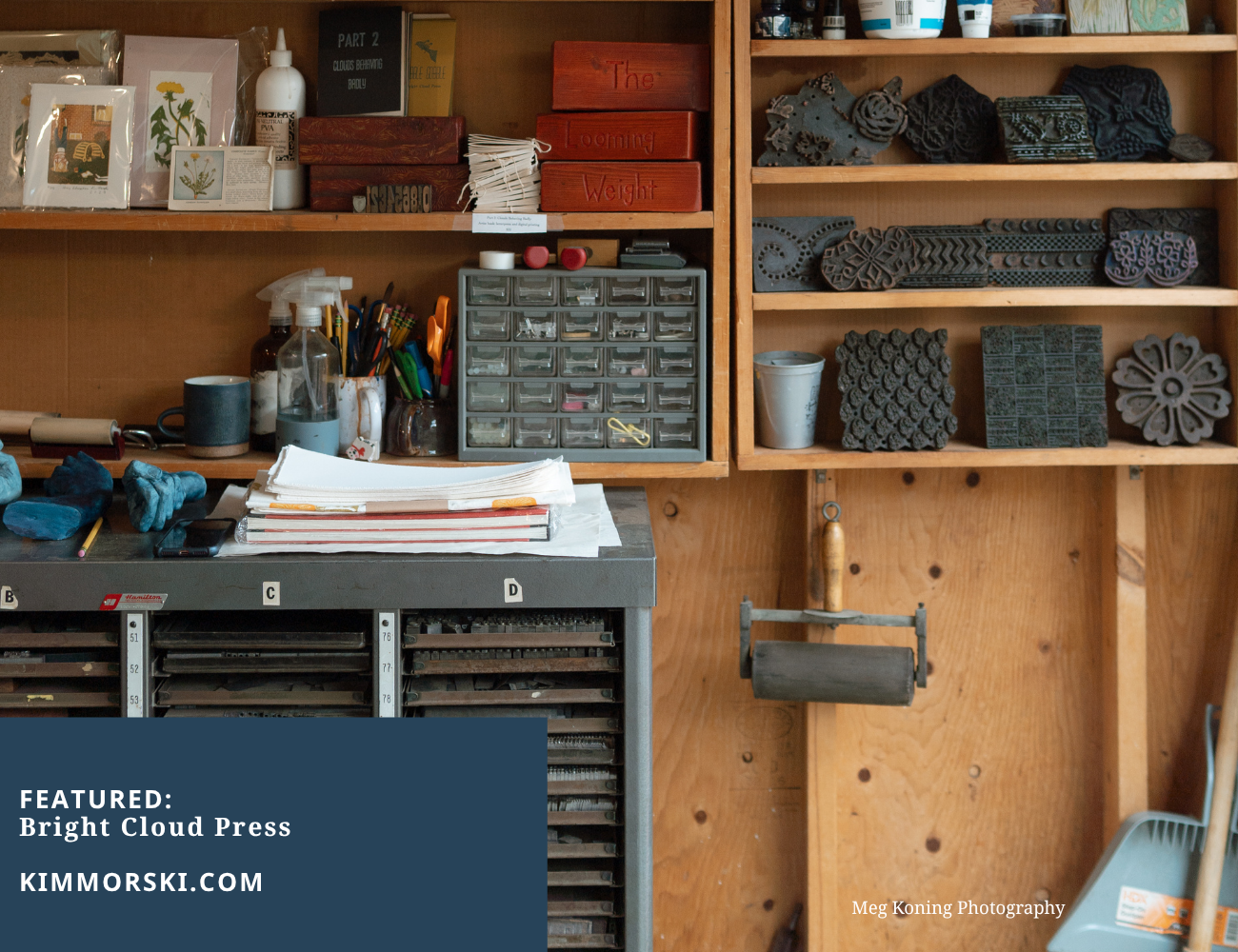
The artist’s studio is a sacred place. For Kim Morski, her studio is the product of decades of dreaming and the patient collection of printmaking equipment. Her artist’s studio now exists as the nexus of creativity in a detached garage in the Harvey Park South neighborhood in Denver. Her studio is a place of artistry and generosity, home and hospitality.
Kim was first inspired by a college professor’s backyard garage print shop. Her vision would take 15 years to become a reality. Over the years, she purchased and was gifted large print making equipment that would be collected in storage units and family basements. When her family moved into their home in 2021, the timeless printmaking machines were consolidated into her studio, located steps from her back door.
For Kim, the garage provides a connection to people and place. In juxtaposition to a white-walled and sterile studio space, the garage door raises to invite in natural light and sounds from the neighborhood. With three young children at home, accessibility to her studio has proven to be critical to her creating. Printmaking requires extensive setup and cleanup time, so proximity supports her creative work. Outside the studio, her daughters play in the backyard and often participate in their own creative work in her studio. Kim’s work reflects this integration of art into family life rather than a separation from it. Her integration of home and creativity is balanced in having a dedicated space to be present to her work.
The printmakers’ studio is unique among artists’ studios, as traditionally printmaking has been done in shared spaces. Artists have rarely had private print shops due to the cost and space equipment requires. “Printmaking feels like it's meant to be done with other people," Kim shares about her conviction of the democratic and social aspects of the medium. She ignites about the artform she participates in. “Printmaking is a way to have original, real art. It's not in the way that we have access to virtual or reproductions now. Printmaking is a financially affordable way for people to own art that touched an artist's hands. That matters to me.”
The social and relational nature of Kim’s creativity with her art studio has been expressed in multiple ways. She hosted a letterpress broadside with a local poet, where prints were created while people gathered on blankets on the hill in her backyard to hear poetry about Colorado. She also hosted a three-day children's art camp. “We did paper making, textile printing, and linoleum block carvings they editioned on the press.” Kim proudly shares, “They did high-level techniques. The children made their own handmade paper, and then addition prints on it. And it was super beautiful.”
An artist’s studio is a place where the process of creativity is uncovered. “When you look at a print, it's really hard to understand what goes into it,” Kim vulnerably shares. “When people come into my shop, and they see a block that I've carved by hand, and then they realize I’m rolling ink onto this and hand cranking it through a press, it gives them an appreciation for the work.” An artist’s studio provides visibility to the labors of love required in any artistic expression. For Kim, her studio is the place where she creates timeless prints that reflect her deep conviction for her family, her home, and her faith. An artist’s studio is a sacred place.
Thank you to Kim Morski for her contribution and the conversation about her studio and her generative creativity that extends to neighbors and friends. You can discover her work at kimmorski.com.
PARTICIPATE | ART & PLACE
THURSDAY, APRIL 23, 2026 6-9 PM
Art & Place
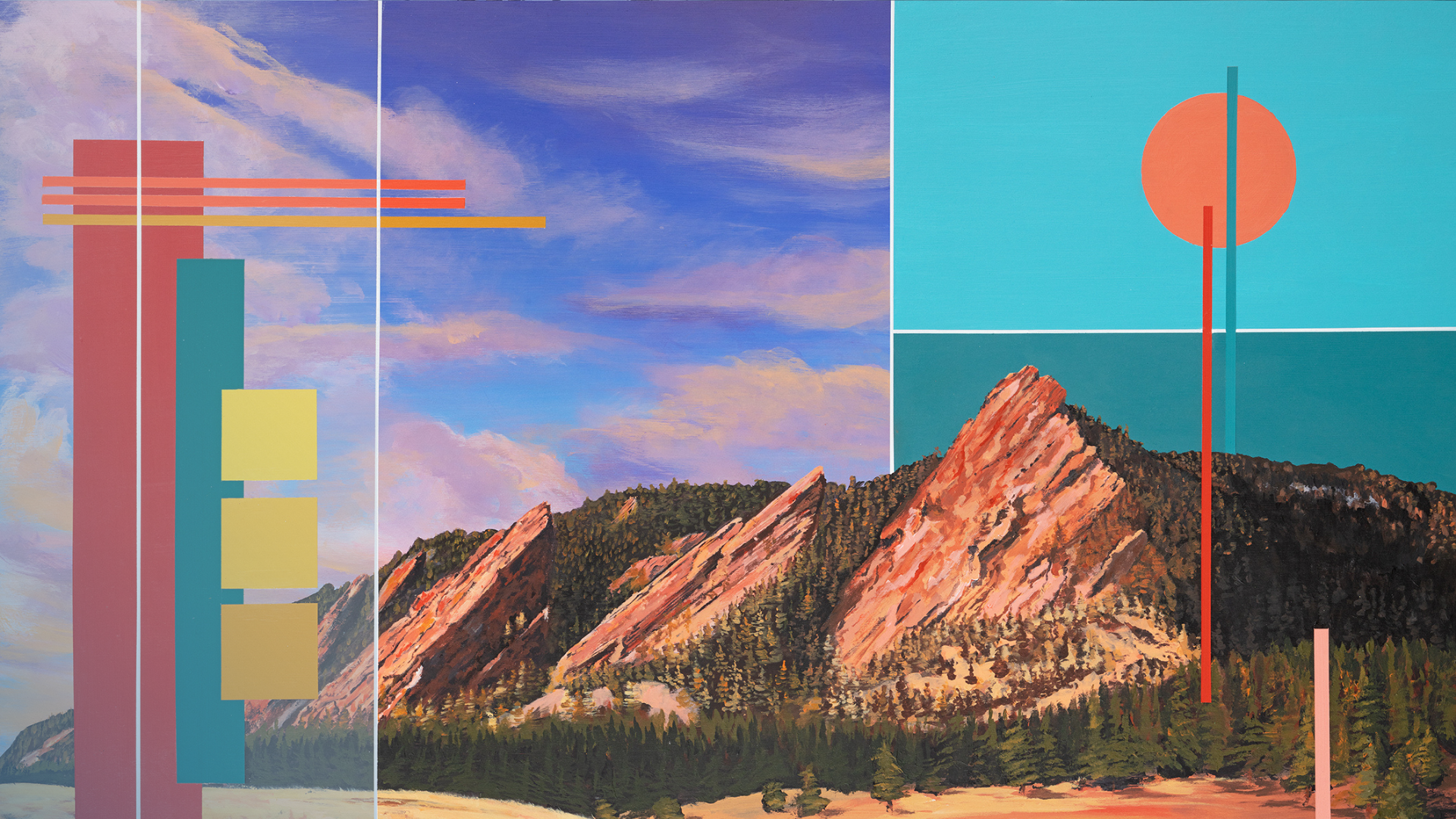
See and celebrate the work of six local artists on Thursday evening, April 23, at ArtGym. There will be an artist panel exploring the often unseen influence of place on art and asking how art can inspire us to love the people and places around us.
Drinks and hors d'oeuvres provided.
Spend an evening this spring celebrating the beauty of art and place.

More rhythms to root your faith in place.
Sacred Place provides a beautiful bi-weekly publication to share the rhythms of a Prayer, Practice, and Place as simple ways to help cultivate love for our neighbors and neighborhoods.