RHYTHMS | PRAYER, PRACTICE, PLACE
Vol 4. Issue 4
Friends,
As we continue with an abnormally dry and warm winter in Colorado, the snow and cold of the season are substantial in many other regions. This issue includes a Prayer for our Warmth, the Practice of Cutting Firewood, and a Fireplace as a sacred Place.
The author and theologian C.S. Lewis wrote, “Is any pleasure on earth as great as a circle of friends by a good fire?” A fire is a place of welcome, protection, and connection. Our hope is that this Prayer, Practice, and Place will encourage you to offer warmth to your neighbors and neighborhood this winter.
All blessings.
Jared Mackey
P.S. If you are looking for Recommended Reading or Resources for Lent, we have a curated list on online at sacredplace.co/lent.
PRAYER | WARMTH

By Jared Mackey
Father in Heaven,
We pray for warmth this winter.
May Your love ignite the embers of our faith
When the winter presses the bitter cold
Against the doors of our hearts and homes.
May Your light illuminate the darkness
Where suffering and sorrow are all too familiar
To our family members and nearby neighbors.
May we not quickly pass by those without warmth,
Who live on the icy coldness of our sidewalks and streets.
Jesus, may we follow Your example as the Good Neighbor,
May we bring warmth to the chill of loneliness by
A warm meal shared,
An invitation to restoration,
An hour of tutoring and re-learning,
A gentle knock and a listening ear.
May our homes have a hearth
To focus our families and friends
On the holy flames of Your forgiveness
And the warmth of Your grace.
May we be people of warmth this winter
Extending welcome and participating in restoration,
Embracing others with compassion
And together experiencing Your Kingdom come
In our neighborhoods as it is in heaven.
PRACTICE | CUTTING FIREWOOD

By Jared Mackey
Practice
Be aware of winter needs. Identify neighbors on fixed or limited incomes and prioritize providing firewood as a practical way to ensure their homes stay warm.
Serve your neighbors physically. See the physical work of cutting, hauling, stacking, and storing wood as an act of love for your neighbors.
Collaborate with community. Look for congregations or local nonprofits who organize cutting and delivering firewood.
Practice proactive generosity. Consider how this embodied act can inspire other tangible ways of caring for your neighbors each winter.
“Firewood heats you three times. Cutting it, stacking it, and burning it.”
Fireplaces served as the primary way to warm homes during the winter before boilers, furnaces, and space heaters. For generations, there was a rhythm of preparation established by cutting wood for the winter. Wood cutting remains an embodied way to love our neighbors in our modern age. The labor of cutting, hauling, stacking, and storing firewood demands sacrifice. It is a physical and practical act of caring for our neighbors each winter.
Firewood is an important way to provide heat for neighbors who rely on fireplaces or wood-burning stoves. For those with fixed or limited incomes, increasing utility bills are a real liability and source of anxiety. Firewood is not just for ambiance or aesthetic; it is an essential and practical way to endure the winter.
Cutting firewood is a tangible way churches care for families in many Colorado mountain communities. Volunteers from several faith congregations in Buena Vista collaborate every year to cut firewood each winter for their neighbors. Each October, men from the Baptist, Anglican, and Nondenominational congregations spend a Saturday cutting and delivering wood for those in need across Chaffee county. Closer to Denver, Conifer Community Church has had a wood cutting ministry since 1997. They host an event where over 100 volunteers come together in partnership with local businesses to process over 50 cords of wood in a single day. For these mountain congregations and the neighbors they serve, wood cutting is a communal activity of blessing.
The work of cutting firewood is proactive and preparational. The practice of cutting firewood is caring for families and homes by providing the resources they will need for the winter. Although many people in our cities do not rely on firewood to heat their homes, proactive ways of caring for our neighbors apply to every neighborhood. Considering the practice of cutting firewood is an invitation for us all to look for practical ways to prepare and care for our neighbors each winter.
PLACE | FIREPLACE

By Jared Mackey
“We no longer build fireplaces for physical warmth, we build them for the warmth of the soul; we build them to dream by, to hope by, to home by.”
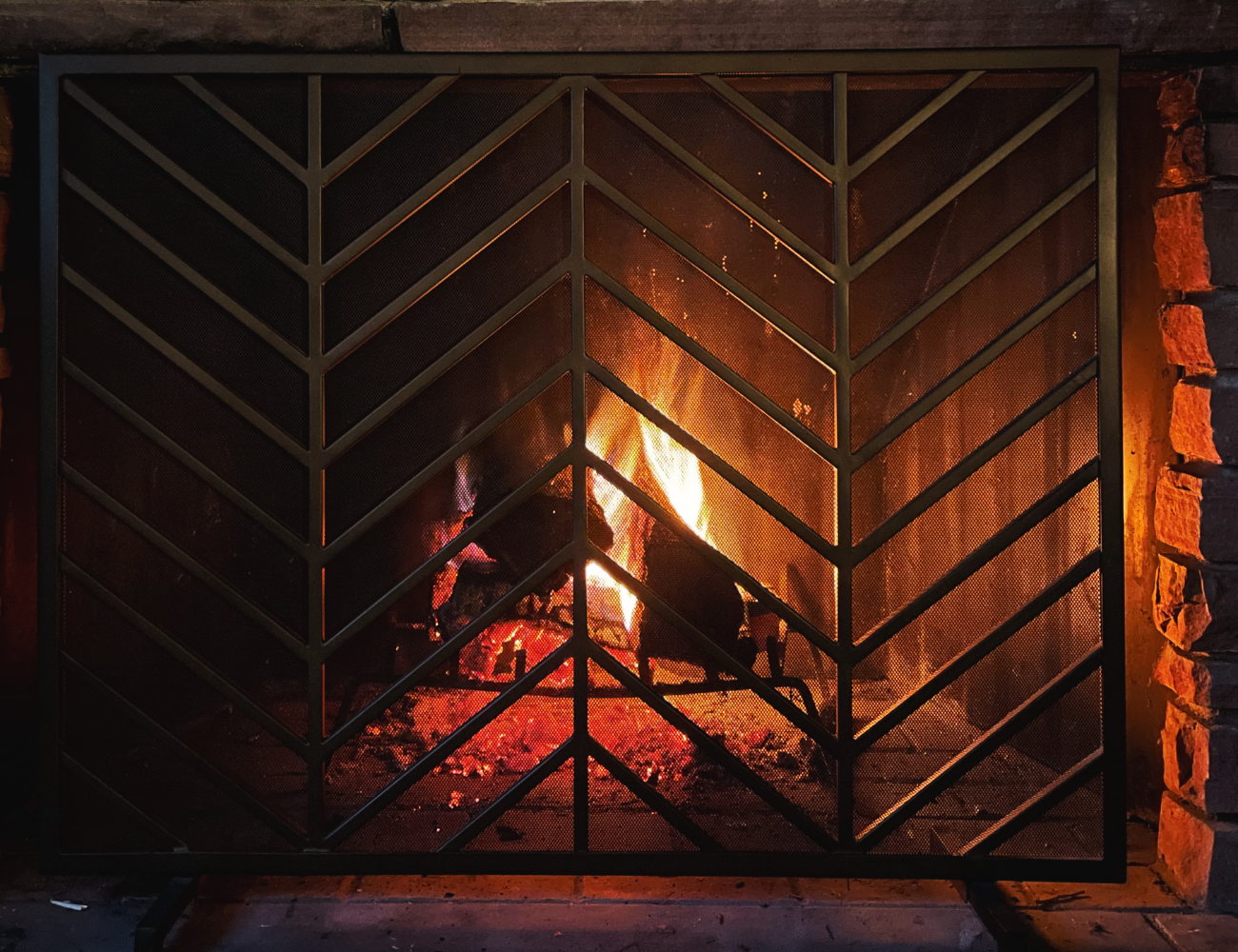
A fireplace is a sacred place. It is a place of ritual and reflection, providing warmth and light from its flickering flames. Fireplaces were historically used for heating and cooking, but also as a place of social connection and spiritual reflection. Almost every civilization has an association with a fireplace.
A fire circle was central to the culture of indigenous tribes in America. Fire provided safety, light, and warmth. Tribes would gather around fires to share stories and wisdom. The traditional Japanese fireplace, an ‘irori’, was a sunken stone hearth in the center of the room, used both to cook and heat the home. Beyond the practical function, it was a symbol of Japanese hospitality. Traditional English and Irish fireplaces were seen as the heart of a home. In addition to heating the home and being the place where meals were cooked, they were where stories and songs would gather family and friends together.
In literature, the fireplace is often seen as a place of protection and connection. In “The Lord of the Rings” by J.R.R. Tolkien, the fireplace is where characters are welcomed, recover, regain strength, and share stories that bring hope. In Laura Ingalls Wilder’s “Little House on the Prairie,” the fireplace is both the hearth and heart of the family.
The sight and sound of a fire have long been known to have a calming effect on the mind and body. The sensory nature of a fire increases physical and mental health. According to a study by the University of Alabama, the benefits include decreasing anxiety and lowering blood pressure.
Fireplaces focused communities and families. Andy Crouch writes, “The fireplace used to be the hearth—the center of a home, both literally and figuratively. The Latin word for hearth is focus, and the activities of premodern homes in both Europe and America were indeed focused on the place that provided warmth, light, and sustenance all at once.” He continues with how the fireplace was a place of shared contribution. “The hearth demanded skills of many sorts, and almost every member of the household contributed to it in one way or another—chopping and stacking wood, carrying the wood to the fire, building and tending the fire, covering it at night so there would still be fire in the morning.” Crouch reflects on how furnaces that now heat most of our homes are hidden away in basements, and our homes often lack a hearth, a place where our families have a shared focus.
Fireplaces bring our gaze together, while the flickering flames invite individual reflection. A fireplace that provides a home warmth on a cold winter evening, or a firepit crackling outdoors in the summer, both create a place of connection and contemplation. A fireplace is a sacred place.
RESOURCES | LENT

SEASONS | RESOURCES
There are Lent rhythms, recommended reading, and resources available at sacredplace.co/lent to encourage your love for your neighbors and neighborhood in this season.

More rhythms to root your faith in place.
Sacred Place provides a beautiful bi-weekly publication to share the rhythms of a Prayer, Practice, and Place as simple ways to help cultivate love for our neighbors and neighborhoods.