RHYTHMS | PRAYER, PRACTICE, PLACE
Vol 4. Issue 6
Friends,
This week, we enter Holy Week, remembering the final days of the life and death of Jesus. This issue includes a Prayer for the Basin & Towel, the Practice of Stations in the Street, and a place of pilgrimage, Mother Cabrini Shrine, as a sacred Place.
Our hope is that these rhythms invite you to journey with Jesus not only in Holy Week, but every week in loving the people and place around you.
All blessings.
Jared Mackey
P.S. - Art & Place is one month away! Register to attend a beautiful evening celebrating and supporting local artists on Thursday, April 23.
PRAYER | BASIN & TOWEL

By Jared Mackey
Jesus,
You are the Light of the World, the King of the Universe, the only Son of God.
And, the way You chose to show us how to love each other
Was through the sacred ordinary
Of the basin and towel.
Your basin and towel confront us
When we believe we need to protect our position and reputation
You stand up, serve, and say
“Unless I wash you, you have nothing in common with me.”
Your basin and towel comfort us
When we are afraid and uneasy,
Even when we deny, betray, and run away,
You affirm our beloved identity, and say
“You are clean because of me.”
Your basin and towel confound us.
You descend in divine humility
And hold the humanity we would prefer to hide,
Inverting our perspective of both following and leading, saying,
“Do you understand what I have done?”
Your basin and towel command us
To a new mandate in how we care for one another
Without restrictions or reservation, You say
“As I have loved you, love each other.”
Jesus,
May we follow You and join You
In loving one another
Through the sacred ordinary
Of the basin and towel.
Prayer inspired by & includes the words of Jesus from the Gospel of John, chapter 13.
PRACTICE | STATIONS IN THE STREET

By Jared Mackey
Practice
(from scottericksonart.com)
Purchase the posters.
Download and print them at a local print shop.
Install the posters in your place.
Share the story of Jesus in a creative way.
“I think the stations are for everyone, because they are a meditation on being human, so I wanted people to see them without the hurdle of having to enter a religious space.”
The practice began with a question. “What can we do to share the Easter story with people in our neighborhood?” Mark Grapengater had recently moved to the Hampden Heights neighborhood, but in the Spring of 2020, navigating the early days of the pandemic, a neighborhood gathering on Easter Sunday was unlikely. Mark considered the art installation, Stations in the Street, “I think this is something we can do.” He recalled the first neighborhood sidewalk installation with a holy nostalgia. “We printed out 36 x 48 architectural size prints from FedEx, made a flower paste, and called neighbors, Christians and non-Christians, and said, ‘I have some art pieces about Jesus. Can I put them on the sidewalk in front of your house?’” Their response was surprising to Mark: “Absolutely.”
Stations in the Street was created by Scott Erickson. “These stations are a cross-section of elements, ideas, and objects from Jesus’ journey to the cross.” Scott writes on his website. Stations of the Cross began as pilgrims retraced Jesus’ steps to his crucifixion in Jerusalem. The Stations of the Cross were recreated in local contexts and have become a part of Christian tradition over the centuries. Erickson created Stations in the Street as a contemporary interpretation of the historic tradition. His art, in various expressions of a cross, invites reflection and contemplation. “I think the stations are for everyone, no matter your religious affiliation, because they are a meditation on being human, so I wanted people to see them without the hurdle of having to enter a religious space,” wrote Erickson.
“People came from all over the city to see them and walk them,” Mark recalls about the first year of the practice. “People are less intimidated by it. Art speaks something particular to people in the place where they are.” Mark installed Stations in the Street by putting two of the large posters on the driveway in front of his house, one at a next door neighbor’s, then another across the street. The Stations continued on sidewalks behind their home and eventually circled around. He placed maps and prayer guides in the kind of boxes realtors use to guide people through the practice. “If you were just going to walk it, it would maybe be 15 minutes,” Mark said, “If you're going to walk, and read, and reflect—it could be an hour.”
He returns to the tangible practice of the Stations of the Street in his neighborhood each year during Holy Week. “Some of my neighbors have reached out to me before I reach out to them, both Christian and non-Christian, asking, ‘Are you going to do the posters again this year?’” Every year, except for one with an exceptionally wet Holy Week, he recreates the art installation in his neighborhood. The practice embodies the incarnation. The posters collect dirt, wear, and often tear. By Easter Sunday, the story of Jesus has been shared with hundreds of neighbors walking their everyday routes to parks, school, and work. Some aware, and many unaware, of who they are walking beside in the Stations of the Street.
Thank you to Mark Grapengater for his contribution to this article and his ongoing expressions of hospitality through The Table Project to his neighbors and neighborhood.
PLACE | MOTHER CABRINI SHRINE

By Jared Mackey
“I am happy to have a mission in the Rocky Mountains where I always desired to go. God be blessed!”
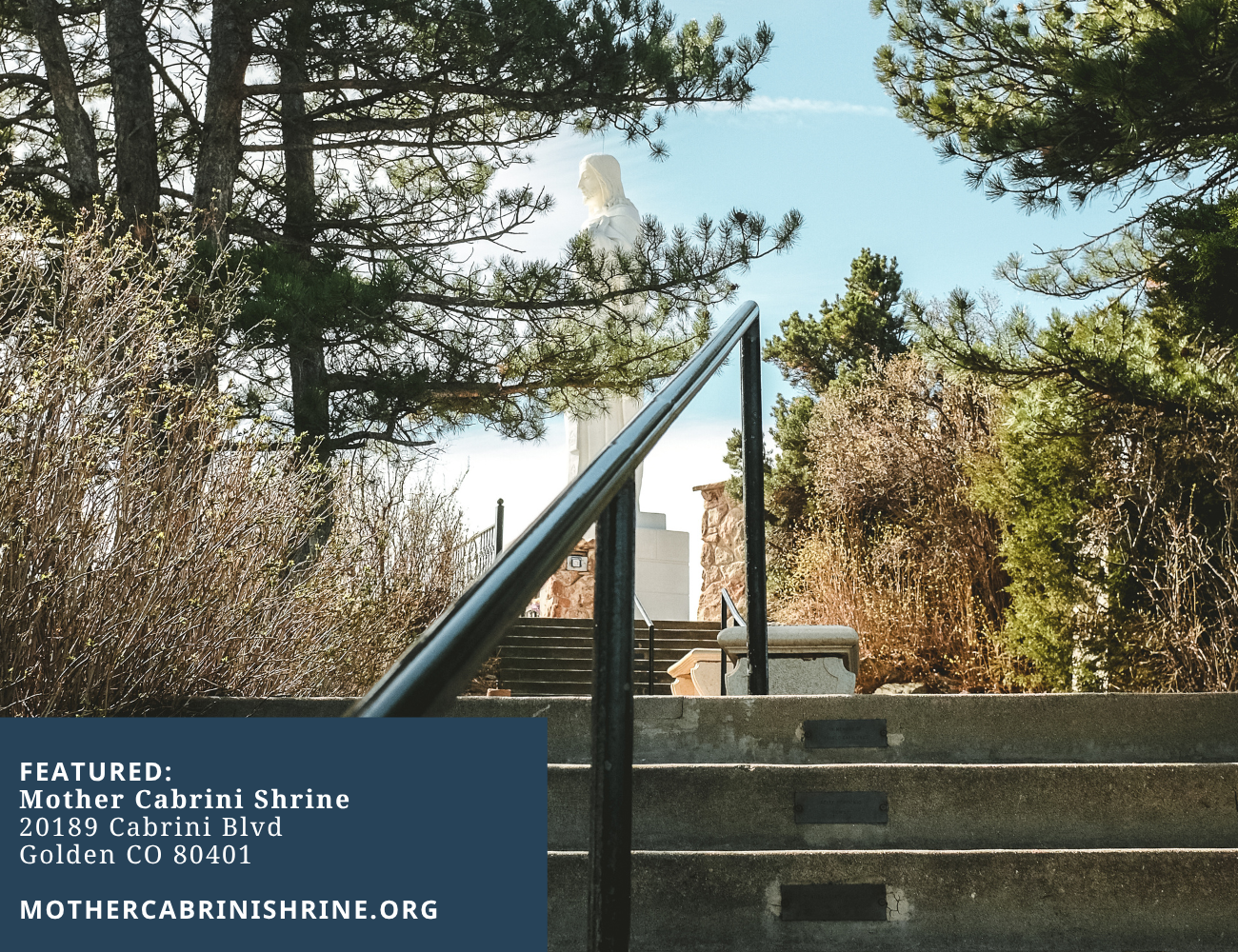
Frances Xavier Cabrini first came to Denver in the early 1900’s. It is only in Colorado that she is affectionately known as “Mother Cabrini” for her compassion and care of children in our city. Her life and legacy are honored at the Mother Cabrini Shrine, located on the land outside Golden she purchased to establish the Queen of Heaven Orphanage. It is in this place she purchased that pilgrims are invited to follow in the footsteps of Mother Cabrini.
Frances Xavier Cabrini was born in Italy in 1850 and arrived in the United States in 1889 with a clear calling to care for the poor, especially immigrants and children. Her life and work were always in motion as she made 24 trips across the oceans and established 67 institutions in North, Central, and South America. Mother Cabrini died unexpectedly in 1917 at the age of 67. Ten years after her death, the process of beatification was begun, and in an unprecedented short time, Frances was canonized a saint in 1946. Having become an American citizen, Saint Frances Cabrini was the first naturalized North American saint.
Mother Cabrini first came to Denver in 1902 to care for immigrants and their children, many of whom were working in the nearby mines. In a letter dated December 23, 1902, to one of the Sisters in Chicago, she wrote, "I am happy to have a mission in the Rocky Mountains where I always desired to go. God be blessed!" In 1909, Mother Cabrini purchased land near Golden and established the Queen of Heaven Orphanage. The hillside property became a refuge for children and a place of prayer. Mother Cabrini explained to her superior that the property cost so little because of a lack of water.
The lack of clean water was challenging for the Sisters. The water from a stagnant pond had to be boiled before it could be used. When Mother Cabrini visited in 1912, a Sister wrote: "She walked over to a large red rock and touched it with her cane. She then said, "Even here beneath this rock there is true water, pure and good, for children to keep clean. Dig a small hole, for beneath this rock is water fresh and light that all can drink." A spring was discovered where Mother Cabrini encouraged the sisters to dig, and it continues to flow today.
That same year, the last time Cabrini would be in Colorado, she, the Sisters, and the girls of Queen of Heaven Orphanage climbed to the top of the mountain to enjoy a picnic. Mother Cabrini asked the Sisters and girls to gather white rocks and bring them to her. They arranged them in the form of a heart with a cross and crown of thorns. The arrangement of white stones remains today at the top of the stairs under the statue of the Sacred Heart of Jesus.
After the death of Mother Cabrini, the property transformed into a place of pilgrimage and devotion. In 1954, the 373 steps leading up to the top of the Mount of the Sacred Heart were completed in just 67 days. The stairway follows the path Mother Cabrini took to the top of the mountain. This stairway is marked by the Stations of the Cross, with each station a stone mosaic depicting the suffering and Passion of Jesus. A museum is in the original water pump house and shares the life of Mother Cabrini with a recreated bedroom and artifacts from her life. Inside the beautiful chapel, completed in 1970, there are stained-glass windows that visually narrate Mother Cabrini’s life from her early calling to her work among immigrants and her journey to Colorado.
An unanticipated aspect of the Mother Cabrini Shrine is the multi-cultural nature of those who come to this sacred place. On my visit, there were multiple languages spoken in prayer along the stairway and sung in spiritual songs near the spring. The mosaic in the chapel of Jesus, Mother Cabrini, and children representing multiple ethnicities is appropriate for a woman whose mission was to care for immigrants and children in so many different countries. The Mother Cabrini Shrine is a sacred place.
PARTICIPATE | ART & PLACE

THURSDAY, APRIL 23, 2026 6-9 PM
Art & Place
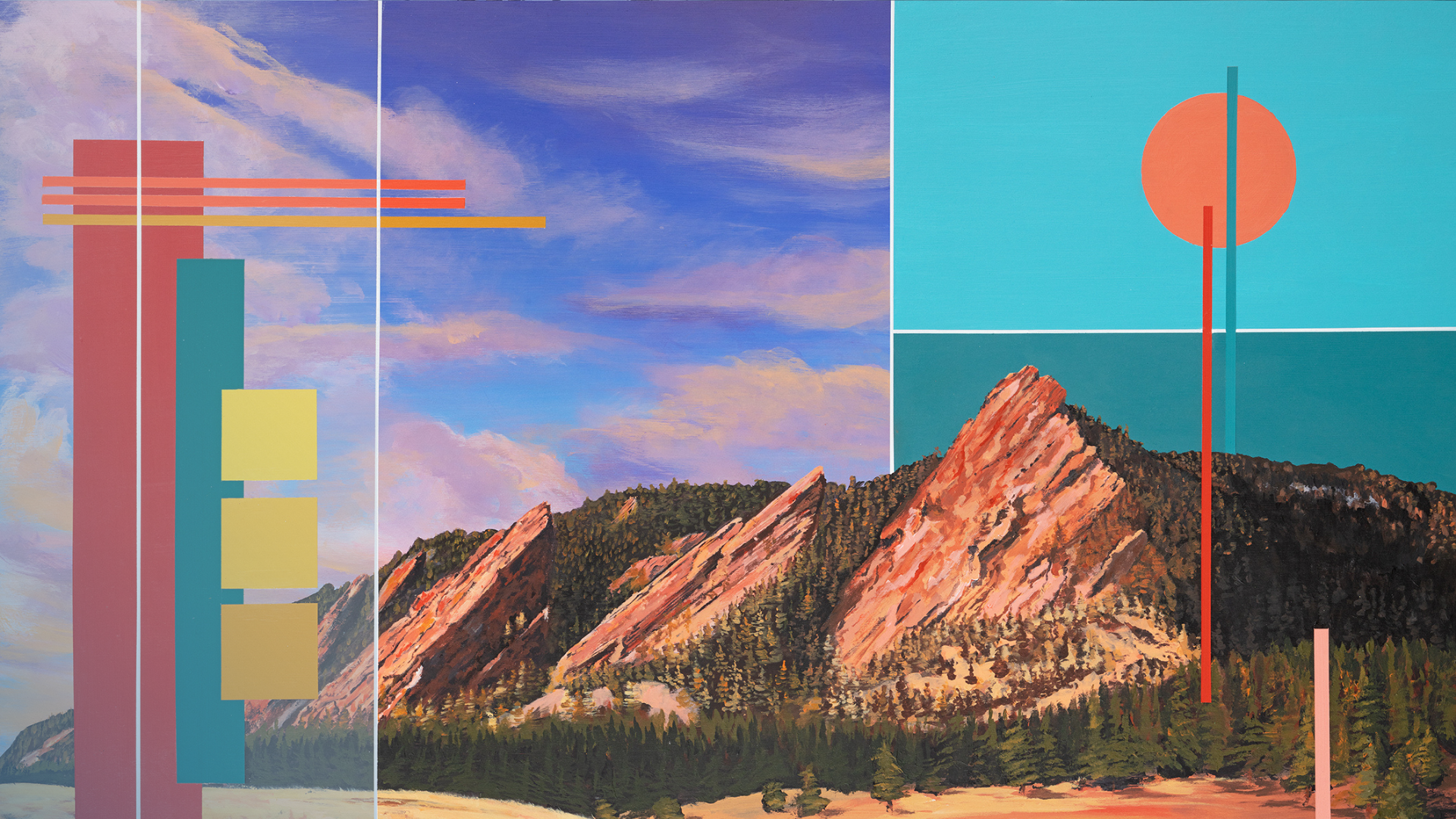
See and celebrate the work of six local artists on Thursday evening, April 23, at ArtGym. There will be an artist panel exploring the often unseen influence of place on art and asking how art can inspire us to love the people and places around us.
Drinks and hors d'oeuvres provided.
Spend an evening this spring celebrating the beauty of art and place.

More rhythms to root your faith in place.
Sacred Place provides a beautiful bi-weekly publication to share the rhythms of a Prayer, Practice, and Place as simple ways to help cultivate love for our neighbors and neighborhoods.