RHYTHMS | PRAYER, PRACTICE, PLACE
Vol 4. Issue 3
Friends,
This week we enter the season of Lent in the Christian calendar. Pope Francis said, "Lent comes providentially to reawaken us, to shake us from our lethargy." It is an annual invitation to excavation and examination.
This issue includes a Prayer to Move Slowly, the Practice of a Digital Fast, and the still and silent beauty of Stained Glass Windows as a sacred Place.
Our hope is the rhythms encourage you in a season marked by giving up and taking up—to be intentional in being present to God, to yourself, to your neighbors, and to your neighborhood.
All blessings.
Jared Mackey
P.S. If you are looking for Recommended Reading or Resources for Lent, we have a curated list on online at sacredplace.co/lent.
PRAYER | MOVE SLOWLY

By Jared Mackey
Father in Heaven,
In our harried and hurried hearts,
May we attune to the speed of love
And the rhythms of grace to move slowly.
May we attend to the slow growth
Of compassion and kindness for our neighbors,
Seeing seeds stretch from the soil in due season.
May we move slowly across holy ground—
Noticing our pace on sidewalks,
At peace in long lines at the grocery,
And pausing as we exit our workplaces and enter our homes.
May we work to remain in the slow current of relationships
In embodied connection with You, ourselves, and our neighbors;
Appreciating what our technological tools can do for us,
And aware what the same tools can undo in us.
May we trust in the slow work
Of Your Spirit, Your will, and Your way;
Confronting the lie that frenetic energy or force
Can ever form us in the way of love.
May we see the sacredness in slowness.
That moving slowly at God-speed
Is an invitation to join You in eternity
In every day.
Amen.
PRACTICE | DIGITAL FAST

By Katie Lukashow
Practice
Start small. Consciously choose 30 minutes in the morning, evening, or both, without screens.
Notice the pull. When you feel the urge to reach for your phone, pause. What are you really seeking? Comfort, escape, connection? Don’t judge, simply notice.
Anchor it in analog. Pair your fast with something tactile: make tea, sit on the porch, play a record, write in a journal with pen and paper.
Walk without devices. Take a 15–30 minute walk with no phone, no headphones. Pay attention. Who is here? What is blooming, resting, changing?
“Sometimes the most spiritual thing you can do is turn your phone off and be fully present.”
Most of us don’t consciously choose our screens, we drift into them; first thing in the morning, last thing at night, and in every moment of silence and stillness in-between. In truth, silence can lose its peacefulness. Any moment of quiet is immediately invaded by worries, grief, anger, and restlessness. Our screens offer a quick and painless escape—a thousand tiny distractions that keep us from simply being.
The promise of connection through our devices has come at a cost. While we scroll, the world just outside our door, the neighbor across the street, the friend at the table, quietly slips out of view. Research shows that even the presence of a phone nearby can lower our ability to focus. “Media multitasking” is linked to diminished attention and memory, the exact skills we need to notice a neighbor’s face, remember a name, or stay present long enough to really listen.
The courage to be alone with our thoughts is where the work begins. In the early centuries of Christianity, fasting was practiced not only as a discipline of the body, but as a way of attending more fully to God. The Desert Fathers and Mothers understood fasting not just as withholding food, but as a resistance to worldly distraction, an invitation to deeper presence, humility, and love. The practice of fasting is less focused on abstaining from something and more about reorienting us towards someone.
To practice this kind of courage in my own life, I’ve started small. Once a week, I walk my dogs fasting from my headphones. Instead of quieting my thoughts with the voices and banter of others, I let my own thoughts get loud and turn into prayers.
Starting with prayer pleases my sense of achievement, so I let whatever noise is rummaging through my head speak first. I imagine this is what God had in mind on those evening walks with Adam and Eve: here are my raw and unvarnished thoughts. How did I move through them? By noticing each one without judgement, I can wonder about their roots and causes, then release them in a short breath prayer. Nothing dramatic happens, but with each step the stillness becomes more inviting, less threatening.
Over time, that same courage to be still and alone becomes the capacity to look up and truly see someone else. Viktor Frankl once observed that when we can’t bear silence, we reach for distraction, and then carry our unexamined restlessness into every relationship we touch. Today, the practice of a digital fast may be one of the most needed forms of spiritual resistance. In a world of endless noise and instant escape, choosing presence is its own kind of wilderness. But, this practice is one where we are reformed into people who are available to God, to ourselves, and to our neighbors.
Katie Lukashow is the Creative Director for Sacred Place. She is currently living in New Mexico with her husband and their two Iraqi rescue dogs.
PLACE | STAINED GLASS WINDOWS

By Jared Mackey
“For me, a stained glass window is a transparent partition between my heart and the heart of the world.”
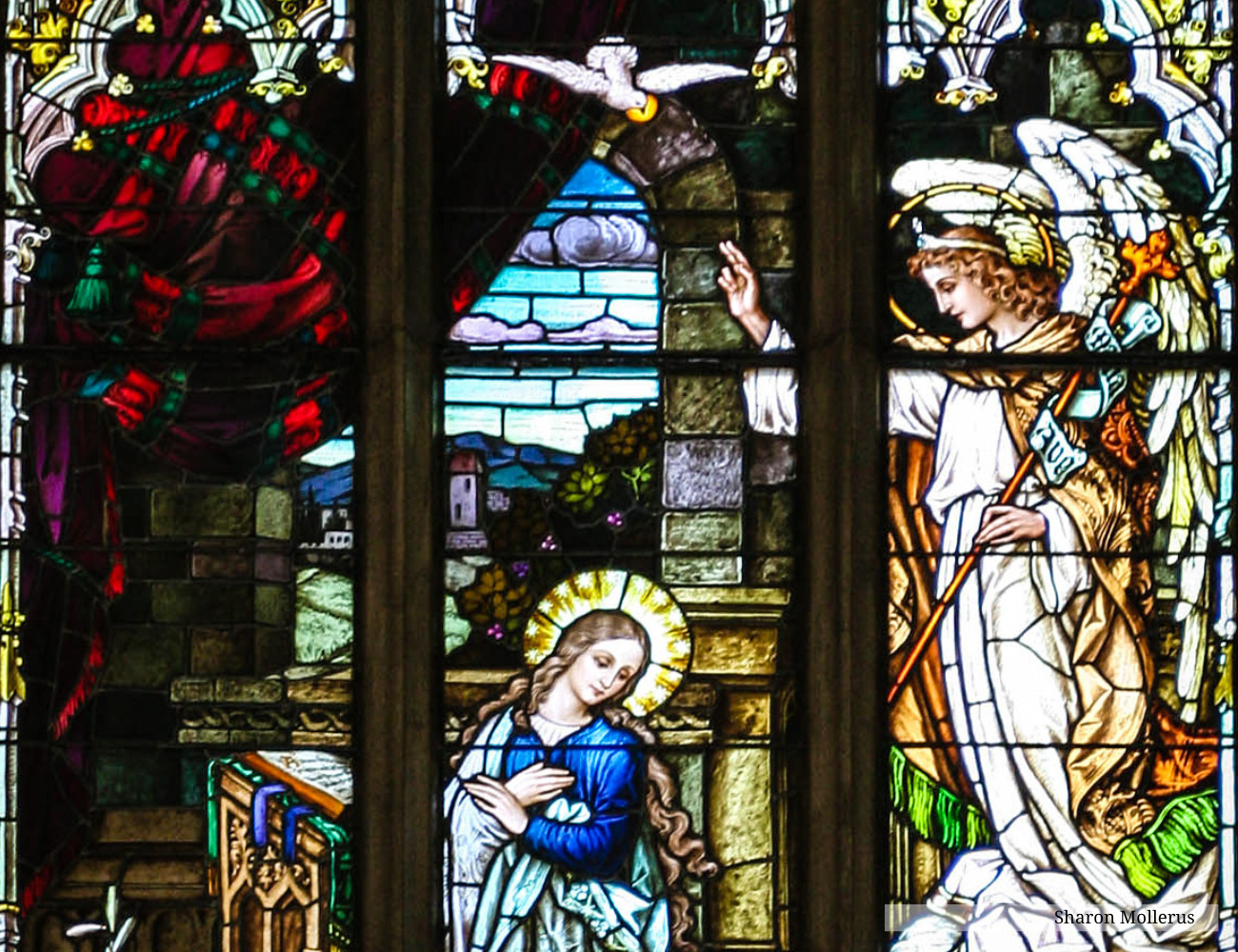
For centuries, stained glass windows have been synonymous with sacred places. They are ornate creations of color and light. Stained glass windows are created by craftsmen for cathedrals and chapels to transform sunlight into a “divine light,” inspiring reverence and worship, contemplation and compassion.
Stained glass provided the masses access to the stories of Scripture. Before literacy was common, stained glass windows communicated stories of the life of Jesus and the saints through illuminated images. They were theology made visible. Their light invited parishioners to gaze upward, reflect inward, and move outward to the world around them.
The beauty of stained glass provides a communal experience. The illuminated images quietly communicate to both young and old. The stories may be more familiar to some, but the experience of a sanctuary filled with beams of color is shared by all who enter. There is inherent equity to their beauty.
There is a timeless brilliance to this ancient form of visual media. Each window was created not only for the immediacy of a moment, but as a patient gift to future generations. These brilliant works of art that required dedication of years to create have consistently communicated their stories over the centuries. This multi-generational dimension of stained glass windows is a reminder of those who have gone before us and who will come after us.
Stained glass windows offer their enduring message in an age of disposable media. While stained glass windows have been replaced by projectors and screens in many places of worship, there is an undeniable difference in the experience of gazing on intricate colors of glass than flickering pixels on a screen. Although stained glass windows are fixed and unchanging, the morning light through them softens the colors and extends calmness and quiet, while afternoon golden sun ignites an array of color beams in brilliance and praise. There is something mystical to stained glass in the permanence of their form and the never-again nature to the light that passes through them.
In Denver, there are awe inspiring examples of stained glass in several cathedrals, including Saint John’s, Trinity United Methodist, and the Basilica of the Immaculate Conception. But equally inspiring are countless churches across the city with windows artfully crafted with images of color and light. A sanctuary filled with ornate stained glass windows or a small chapel with a single illuminated image both provide an opportunity to gaze upward, inward, and outward.
Stained glass windows are a juxtaposition of quiet stillness and brilliance of light. They communicate through illuminated color from one generation to the next, this is a sacred place.
RESOURCES | LENT

SEASONS | RESOURCES
There are Lent rhythms, recommended reading, and resources available at sacredplace.co/lent to encourage your love for your neighbors and neighborhood in this season.

More rhythms to root your faith in place.
Sacred Place provides a beautiful bi-weekly publication to share the rhythms of a Prayer, Practice, and Place as simple ways to help cultivate love for our neighbors and neighborhoods.