RHYTHMS | PRAYER, PRACTICE, PLACE
Vol 3. Issue 25
Friends,
As we enter the Advent season, this issue includes a Prayer to Move Slowly, the Practice of a Puzzle, and a Prix Fixe Menu as an unexpected sacred Place.
Our hope is these simple rhythms encourage you to slow down and settle-in to this sacred season of waiting.
All blessings.
Jared Mackey
P.S. More Advent rhythms, recommended reading, and resources are available at sacredplace.co/advent to encourage you in loving your neighbor in this season.
PRAYER | MOVING SLOWLY

By Jared Mackey
Father in Heaven,
May we move slowly in this Advent season
And in a countercultural cadence
Trust that the One we wait for
Is the One we wait with.
May our rhythms of relationship
Be shaped this season
By lingering and savoring slow moments
Of becoming and belonging.
May our rhythms of work
Realign to a holy pace
That honors the shortened day
And the limitation of light.
May our rhythms of rest
Value the deep work of dormancy;
Where our bodies and brains
Learn from the sacred stillness
Of Your creation.
May our rhythms of rootedness
Grow beneath surface interactions
With our neighbors and in our neighborhoods.
May we uncover the hidden heart
Of the places we live, learn, and lead.
May our rhythms
Move slowly
In this season.
And may our slowing
Be an embodied prayer
That the One we wait for
Is the One we wait with.
PRACTICE | PUZZLE FOR ADVENT

By Jared Mackey
“Sit long. Talk much.”
Practice
Select a puzzle and a place. Consider a puzzle with enough pieces that requires multiple days to complete. Place it where its presence invites placing a few pieces each day.
Practice patience. Resist the urge to complete it in a single setting. Let the puzzle take the time it takes.
Invite collaboration. Observe how doing a puzzle with multiple people is a more communal process.
Reflect on the practice. Notice how a puzzle influences your pace and perspective during the Advent season.
Puzzles are a creative way of slowing us down. They invite us to look closely, be patient, and appreciate the process. In the season of Advent—a season marked by anticipation and the spiritual work of waiting—a puzzle can ground us in an embodied practice. A puzzle is a practice that reminds us that the process is as essential as the completed product.
The first hand-cut puzzles were crafted in 1766 by a London cartographer and engraver. He created them by mounting maps onto wood and cutting out pieces along geographic boundaries. They were invented to teach children about geography in an engaging way. Puzzles became popular in the early 1900s in America and were a must-have for vacation homes and social parties. During the Great Depression, puzzle makers made the switch from wood to cardboard to cut costs. This shift made mass-production of puzzles possible. Recently, there has been a return to heirloom-quality, wooden jigsaw puzzles.
Puzzles offer a shared invitation to participation. They are a practice where an unfolding picture is constructed by the contribution of many hands. A puzzle is quite countercultural. It is a tactile, time-intensive, and often mentally challenging practice. It invites a slowed pace and requires a patient mind. It is a remarkably grounding practice to be present to both the process and people.
Working on a puzzle during Advent is an embodied invitation to the intention of the season. Advent is a season of waiting with expectation, trusting the unfolding will come, slowly, piece by piece. A puzzle is a creative way of practicing watching and waiting during the Advent season.
This Advent season, consider the practice of building a puzzle. Ask family or friends if they have puzzles, and if they would consider exchanging them for the season. Set the puzzle in a place where when neighbors, roommates, family, or friends come over, there is an open invitation to participate. A puzzle provides an invitation to slowing, looking, and patiently awaiting what is to come.
Liberty Puzzles are wooden jigsaw puzzles made in Boulder, Colorado.
PLACE | PRE FIXE MENU

By Jared Mackey
“I think food, culture, people, and landscape are all absolutely inseparable.”
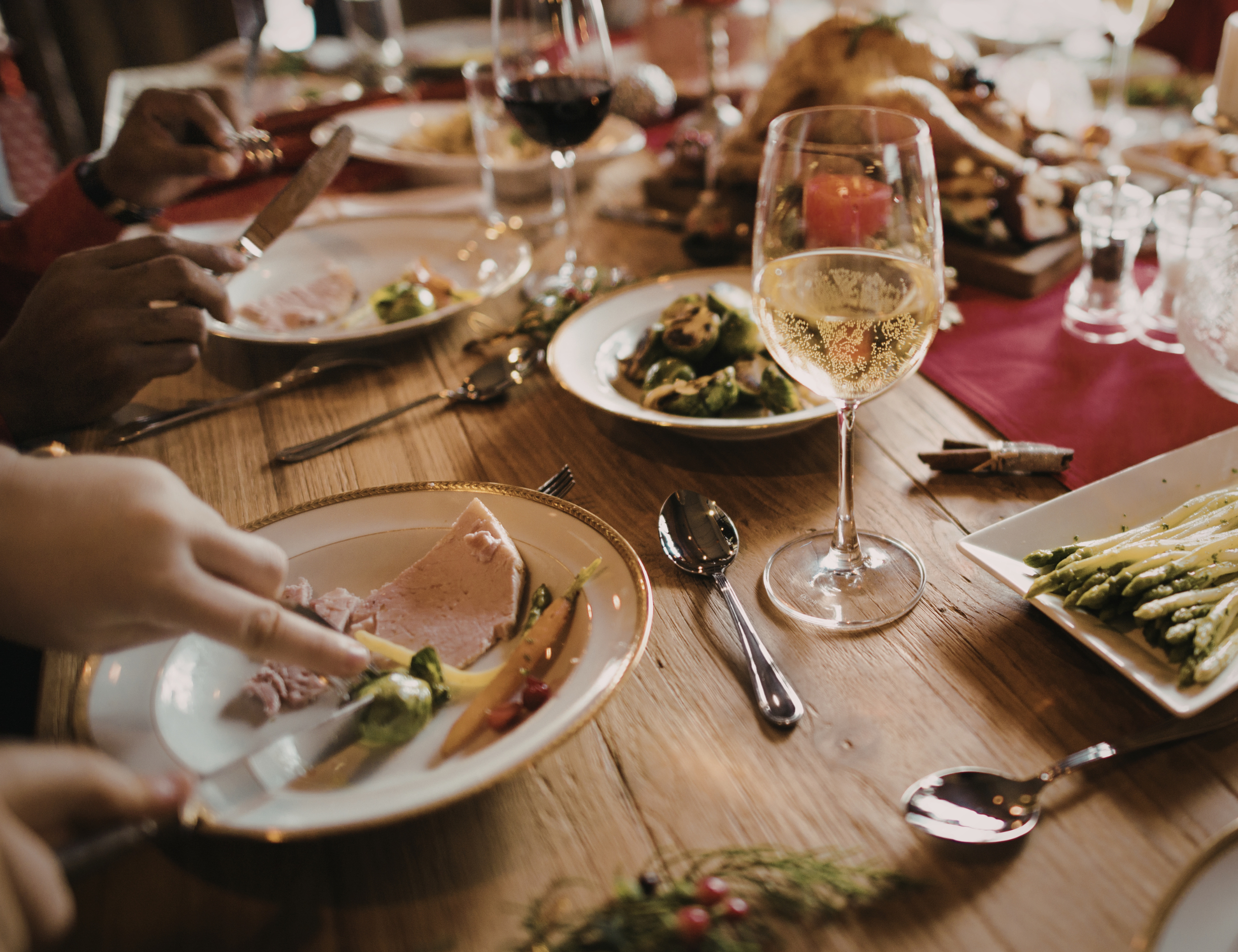
There is something unexpectedly sacred about sitting down to a prix fixe meal. Long before the first dish arrives, the experience offers an important invitation: slow down. Be here. The meal will unfold at its own pace. In a moment marked by choice, efficiency, and immediacy, a prix fixe menu moves at a different rhythm—one shaped by presence, patience, and delight. It creates, in a simple and tangible way, a place where we become more aware of our senses and the people sitting beside us.
The prix fixe meal’s origin was rooted in hospitality. “Prix fixe” is a French term that translates to “fixed price” in English. Auguste Escoffier was responsible for the first prix fixe menu in Monte Carlo in the late 1800s. He wanted to curate the experience and minimize decisions for inexperienced customers to avoid the embarrassment of not understanding the menu. The structure of the menu was simple: trust the chef, trust the process, trust that something good will come in time, course by course. Beneath the culinary creativity, the heart of a prix fixe menu is a meal meant to be received.
A restaurant that offers a prix fixe menu offers a sanctuary of pace. It is a conscious choice to surrender our personal preference and receive the gift of the kitchen’s direction. It is receiving the freedom of releasing control. It is based in the Biblical belief that limits are not only good but expand my capacity to be my true self. The pace slowly shifts our posture throughout the dinner to one of anticipation and appreciation. During the season of Advent, a prix fixe menu can be a tangible expression of what it is to watch and wait.
A prix fixe meal arrives one course at a time. At a table where we trust and receive what is prepared, there is embodied learning that presence is more nourishing than preference. Part of the joy of a prix fixe menu is taking the risk of not liking something for the payoff of discovering something we never even knew we would like. Our lives are filled with so many options that cater to our preferences. A prix fixe menu reminds us that sometimes our preferences are not always what is best for us. We can self-determine ourselves into isolation. Rarely are our choices perfectly aligned with the choices of others. A prix fixe menu submits our preferences to choose a shared experience. Do we get exactly what we want? Not always. But in some ways, we get more.
Amid the holiday season, often marked by hurry, decisions, and noise, a prix fixe meal is a place which invites a different pace. It teaches us that savoring is a form of gratitude, and that presence is one of the greatest gifts we can give and receive. A prix fixe meal invites a posture of anticipation—trusting and receiving each course will arrive. It is a unique way food can teach us patience and presence. A prix fixe menu is a sacred place.
Thank you to Steven Strott and Patrick Pearson for their contributions to this article and their shared appreciation for the prix fixe menu.
Find a spectrum of prix fixe meal options in Denver at
Somebody People, Two Hands, and Margot.
RESOURCES | ADVENT

SEASONS | RESOURCES
This holiday season, consider giving a Sacred Place Guidebook as a gift to encourage a more deeply rooted faith. The guidebook is an anthology of prayers, practices, and places to help cultivate love for our neighbors and neighborhoods.
The design resembles a travel guidebook printed to provide an introduction and important information about a particular place. The place this guidebook introduces us to is the place we already call home.

More rhythms to root your faith in place.
Sacred Place provides a beautiful bi-weekly publication to share the rhythms of a Prayer, Practice, and Place as simple ways to help cultivate love for our neighbors and neighborhoods.